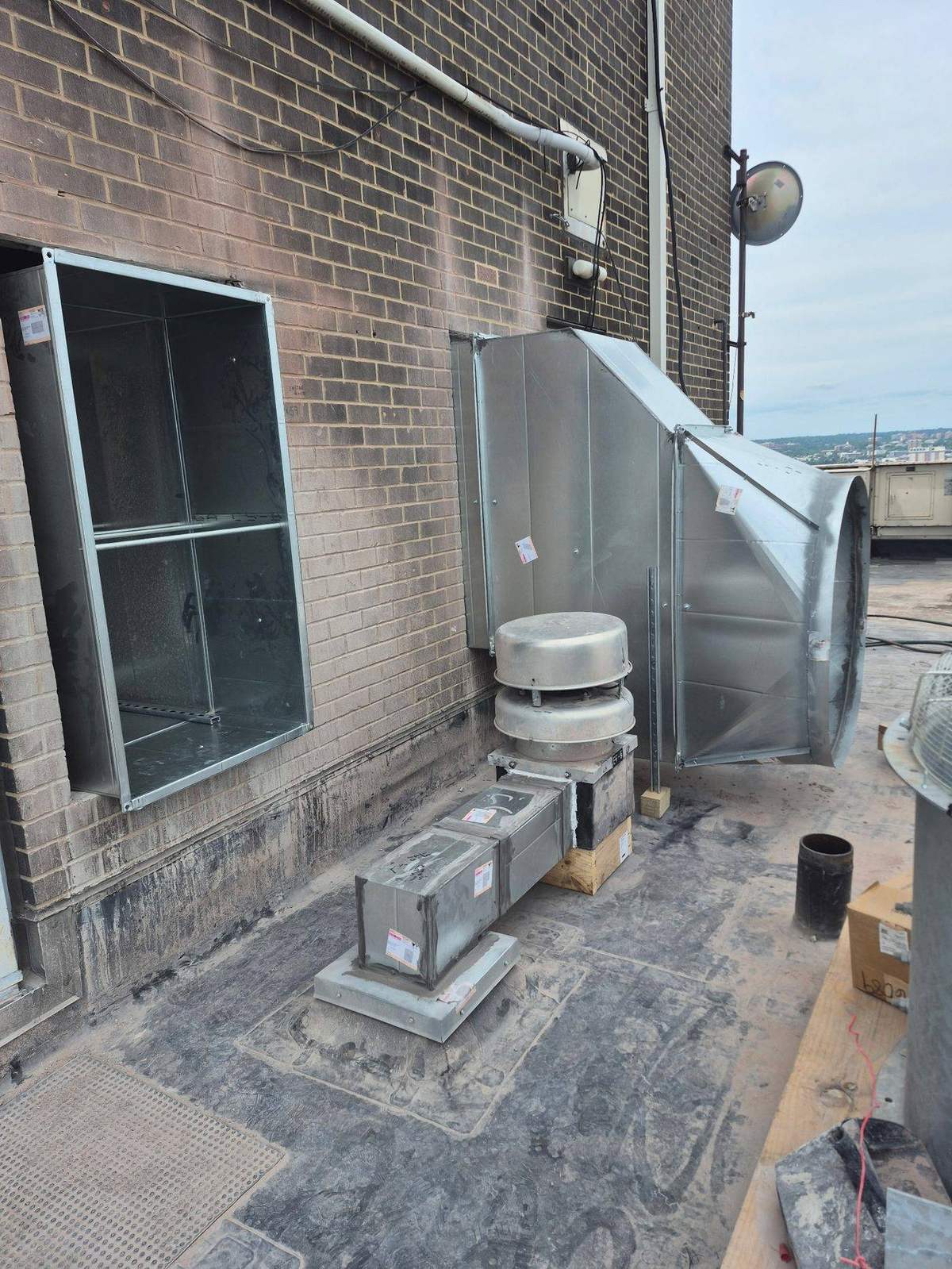
Sketch the duct run the way you always have. Get the cut list, the connector deductions, the fitting and diffuser count, and the material order before you climb down. No CAD. No classes. No desk.
Start your 2 week free trial REAL JOB. REAL CREW. REAL MATH.If you can sketch a run on the back of a submittal, you can run this app. Your finger is the pencil.
First takeoff in ten minutes. It draws the way the trade already reads it.
It lives on the phone in your pocket and works standing under the deck — where the duct actually goes.
Every cut prints its math, connector deductions and all. Check every number before you shear.
Drag your finger the way the duct runs. Legs snap to real directions. Don't know a length? Mark it "?" and it gets solved.
Pick your liner thickness once and it sizes the duct to the free area you need, and puts wrap and pins on the insulation list — not the metal list.
Tap in the takeoffs, flex whips, boots, and every diffuser. Rack in the way? Mark it and it dodges, counting the added fittings and the offset math.
Cut list with connector deductions shown, the fitting and diffuser schedule, hangers and ceiling wires counted, and the consumables — done before you climb down.
Field-tested by our crews on live commercial work — nothing staged.
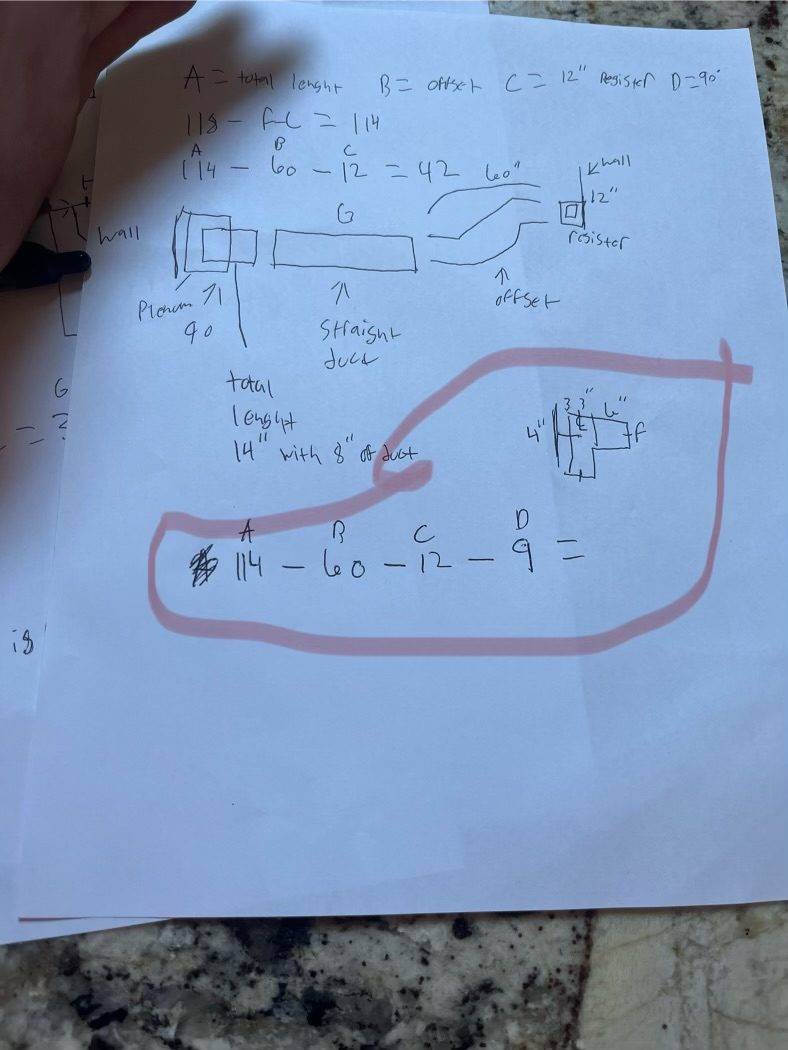
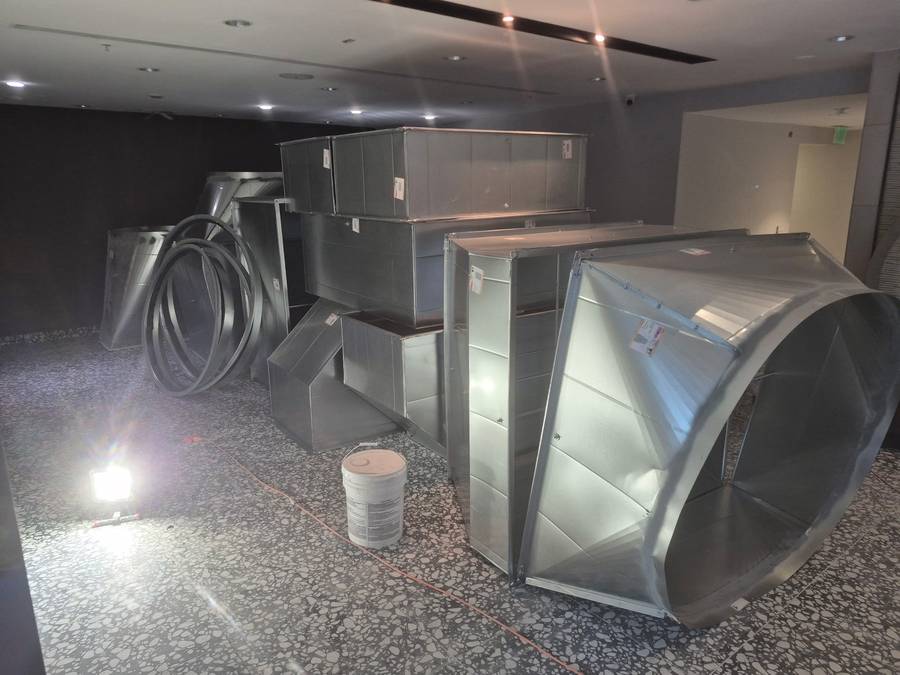
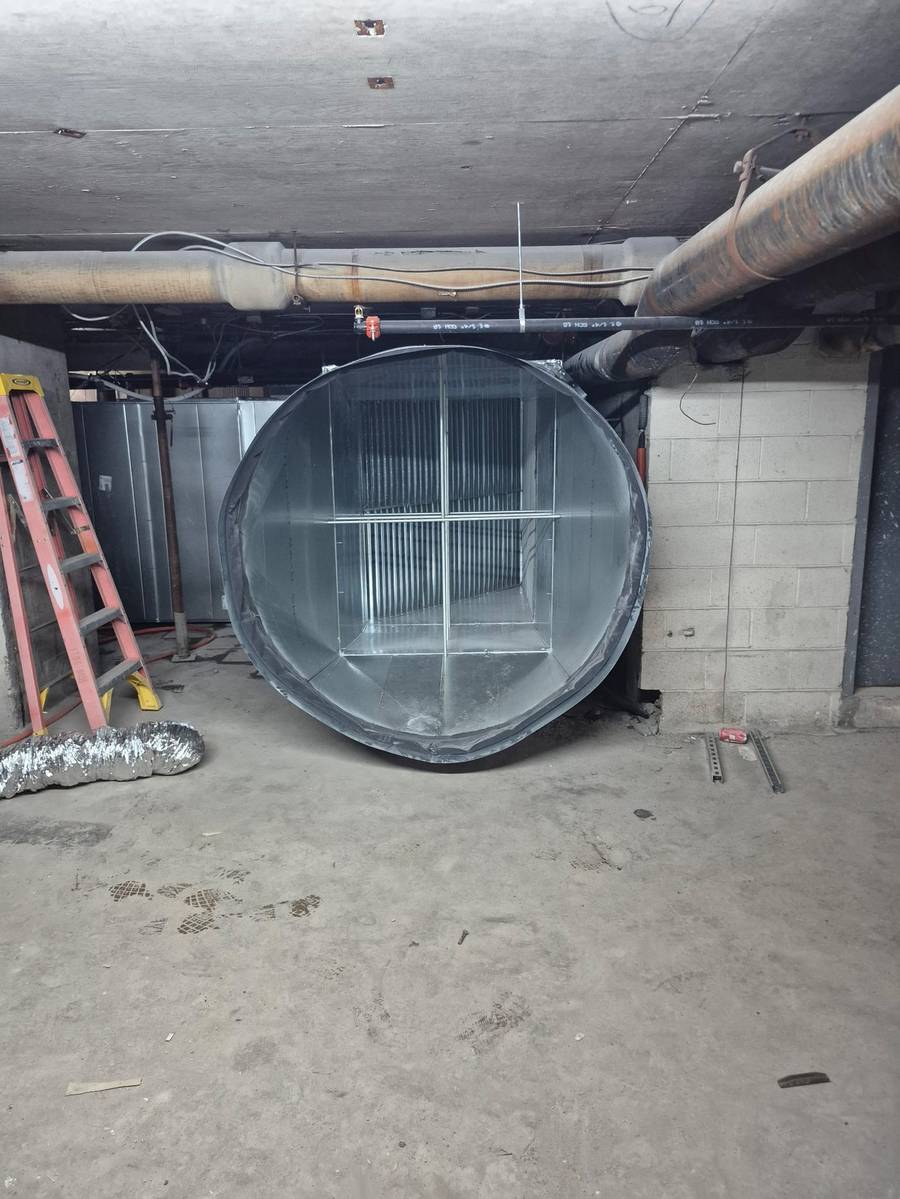
Gloves on, hands filthy? Talk. Up a lift, tape in one hand? Talk. Can't see the screen? Talk. Put your instructions in out loud — it comes back with "got it" so you know it heard you, and that's all it ever says. It uses your device's own voice, so it already sounds like the phone in your pocket.
You: "Trunk runs ten foot, then offset over the rack."
It: "Got it."
You: "Make that eleven six."
It: "Got it."
The number you lose is the one you read up a ladder and wrote down two minutes later. Say it the second you read it and it's in the sketch. He talks. It listens.
Tell it 1" or 2" liner and the app builds the duct to the free area you need — not the size scribbled on the print.
External wrap gets figured by the square foot off the actual run and lands on the insulation list — separate vendor, separate order.
Exposed spiral in a warehouse? Say so once and it stops adding insulation you're not installing.
The stuff that stops the job at 3 p.m. — pins, clips, adhesive — counted with the run, not guessed at the counter.
Trunk line's the easy part. The takeoffs, the flex whips, the boots, and every diffuser and register — that's where the count falls apart and somebody drives back to the counter.
Drop a flex whip off the trunk, give it a length, and it counts the flex, the collar, the damper, and the clamps.
Neck size, boot, and the grille — counted per opening so the schedule and your order actually match.
Code says support it independently of the grid. It counts two wires on every diffuser — missed on nearly every layout.
Give it the spacing and it counts hangers, straps, and rod for the whole run — including the extra pair at every offset.
You're standing in the basement looking at the actual job — not a drawing from somebody's office.
Every length, every fitting, every connector — counted off the real conditions, with the math shown.
One trip to the counter with the full list. The transition nobody counted? Already on it.
Change order? Homeowner asking "how much"? You've got the material list before you're up the stairs.
Every shop has one — the guy who walks a ceiling and just knows which way the trunk should run, how much the connector eats, where the transition has to start. He learned it over forty years from someone who never wrote it down. Now he's retiring. The new guy gets a tape and "figure it out." That gap is your scrap, your rework, your callbacks.
Connector allowances by type, gauge and reinforcement by size and pressure class, free-area sizing on lined duct, flex and diffuser counts. Not guesses. If a number isn't published, it says VERIFY.
It flags the piece that can't be made — the transition with nowhere to start, the offset that won't clear — before the shear. The save happens at the brake, not the callback.
Field dimension − connector allowance at each end = CUT, printed next to the piece. The apprentice learns the deduction while he uses it.
The layout knowledge of a forty-year sheet-metal foreman, in every pocket on the crew, on every job, forever. That's the whole point.
Two tracks, ten modules each. Run the Program teaches the app; Foreman School teaches the trade. Hand it to your apprentice on day one, print it and share it with your crew.
1 · Your first five minutes · 2 · The Job box — system, gauge, size · 3 · Benchmarks & elevations · 4 · Drawing the duct run · 5 · Transitions & takeoffs · 6 · Elbows and offsets · 7 · Obstruction dodges · 8 · Cut list + fitting schedule · 9 · Sheets & match points · 10 · Printing the stack
1 · Duct sizing basics · 2 · Reading mechanical plans & schedules · 3 · Connector deductions (slip/drive & TDC) · 4 · Measuring in the field like a mechanic · 5 · Hangers & support spacing · 6 · Sealing & leakage class · 7 · Transitions, offsets & static pressure · 8 · Insulation & liner — the separate list · 9 · Multi-sheet layouts · 10 · Training the next guy
No login. No email. Print it, save it, share it with your crew.
The full takeoff engine, cut lists, the Bucket, and the complete training library. Same price for a one-man shop or a hundred hands — no tiers, no corporate discount.
Start my 2 week free trial2 week free trial, then $59/mo per seat. Cancel anytime.
On duct the Bucket is a short list on purpose: the consumables and the hanger hardware. The metal gets built off the cut list. Tell it what you already own and it only orders the difference.
Test it on your own work — free. Two weeks, no card games.
Start your 2 week free trial